
In the episode 1 of Season 3 of popular Netflix series Black Mirror, Nosedive, the viewer is introduced to a society where every citizen is rated by other citizens. Even micro interactions have an effect on one’s score. In this episode, protagonist, Lacie, fights to raise her score to be high enough to get a discount on her dream apartment and change her life for the better. Lacie can only improve her score by receiving good ratings from her fellow citizens, even ones that don’t even know her, but simply see her on the street, or in the airport. Her good ratings boost here even higher if they are given by other highly rated citizens. This system shapes the way Lacie interacts with others. She constantly tries hard, in fact, too hard, to impress others. Lacie winds up losing herself and plummeting her score because of her “try hard” and ingenuine attitude.
Throughout our daily lives, everything we say, do or post is judged by other people. Someone might cut another person online at the coffee shop and anyone who sees is may silently label that customer as a “bad” person. Another example is if a person brings a sandwich to a homeless man, passersby may label that person as “good.” Going past just actions, after having a phone exchange with a customer service employee, meeting a new person in town, or talking to a coworker you don’t often work with, after every conversation people are left with either positive or negative impressions of the other person. On social media, people are constantly being rated. A picture may be rated by the number of likes it receives, a video by views, or a profile by followers. It’s always nice to be rated or judged as a good person by others, but these small interactions with strangers don’t have much impact on an individual’s life in the grand scheme of things. But what if that all changed?
According to the article “Big Data Meets Big Brother as China Moves to Rate its Citizens” by Rachel Botsman from Wired, in 2014, China launched a system called the Social Credit System that gave citizens a numerical rating on a scale from 350 to 950. Daily interactions of Chinese citizens are constantly monitored by big data companies commissioned by the Chinese government. The scores is given to an individual based on five categories: credit history, fulfilment capacity, personal information, behavior and preference, and interpersonal relationships. A person’s score is affected by how well he or she pays bills, things he or she purchases online, where he or she goes in taxis, and who he or she interacts with. Even the scores of a person’s friends can impact their own score.
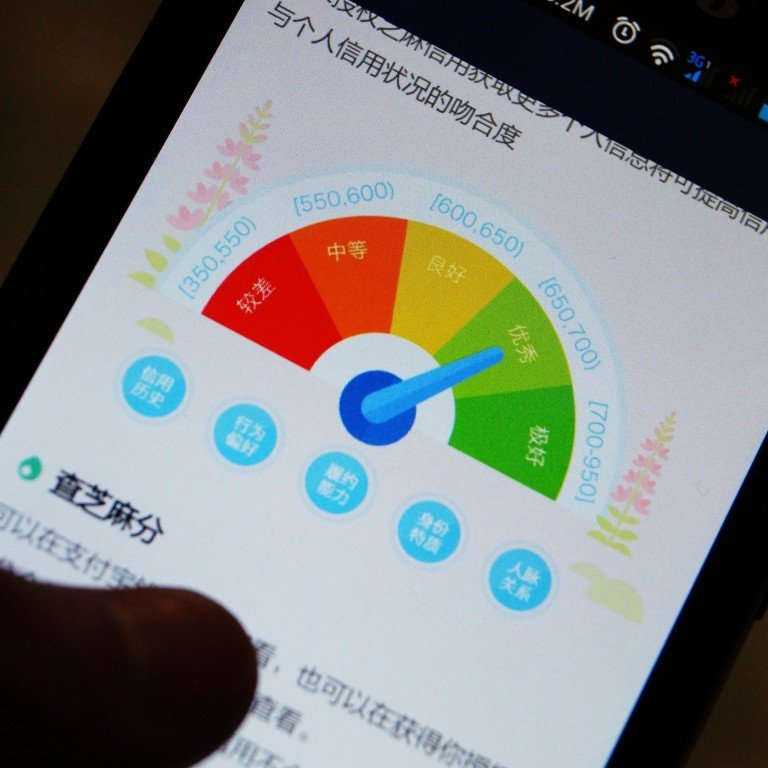
Black Mirror episodes are often scary because they represent a future where technology takes over human compassion and ethics, a future that not many hope to see. However, the Chinese Social Credit System almost makes Nosedive a reality. Many of the interactions used to rate characters in Black Mirror are used in real life to rate citizens of China. Furthermore, like in the episode, the Chinese people’s Citizen Score is used to grant them certain privileges such as faster internet speeds, better education, and ability to purchase cars without a down payment. Another way the episode mirrors the Chinese Social Credit System is the scene in the episode when Lacie cannot board her plane because her ranking is not high enough. In China, the government has the right to revoke travel privileges of citizens who do not have a high enough score.
Although the rest of the world may not have a unified scoring system for all interactions, scores that effect daily lives can be seen on a smaller level. In the article, “The Chinese Social Credit System: A Model for Other Countries?” by Síthigh and Siems, it is explained that many countries are not as far off from a social scoring system as they may believe. It states, “all major platforms, such as Uber, Airbnb, and TaskRabbit, and indeed precursors such as CouchSurfing, make use of a combination of scoring and feedback systems.” Sure, scores from these services may not affect our international travel or internet speed, but they do effect how people can interact within that platform. On Uber, both drivers and passengers are giving a rating from 1 to 5. If a score is not high enough, a driver may be fired, or a passenger may not be picked up. Uber is a good example because both the driver and the passenger are rated by the other from just a short interaction, similar to the Black Mirror episode.
If more governments move towards a social credit system, social media would play a large role in scores. As stated earlier, people are already judged based off of social media. While most of these judgements don’t have large effects, certain posts may be enough to cause an employer to pass a potential new hire up or even an organization to kick a member out of a club. However, if a government decided to rate citizens based off of all interactions, social media posts would have a much heavier weight on daily life. A post could lower a score based off of where the person in the post is located, what they are wearing or what they are doing in the post. Furthermore, a person’s friends on social media could raise or lower a score. If social credit systems become a reality all over the world, social media would become even more superficial that it is now. People already put up a front by posting only the best of their lives. If privileges and one’s life opportunities depended on social media, people would completely modify what they post and how they interact on platforms.
Botsman, Rachel. “Big Data Meets Big Brother as China Moves to Rate Its Citizens.” WIRED. WIRED UK, January 21, 2019. https://www.wired.co.uk/article/chinese-government-social-credit-score-privacy-invasion.
Síthigh, Daithí M. and Siems, Mathias. “The Chinese Social Credit System: A Model for Other Countries?” The Modern Review, 82. September 04, 2019.
 Everything Emma