When a person does a quick search on google about a topic, Wikipedia is always one of the first resources that pops up. Wikipedia is an online encyclopedia with information submitted from people all around the world. It can be a great source for basic information on a variety of topics, however, its credibility has been questioned since information comes from every-day people. I decided to investigate Wikipedia’s article publishing process myself to learn more about the website and its credibility.
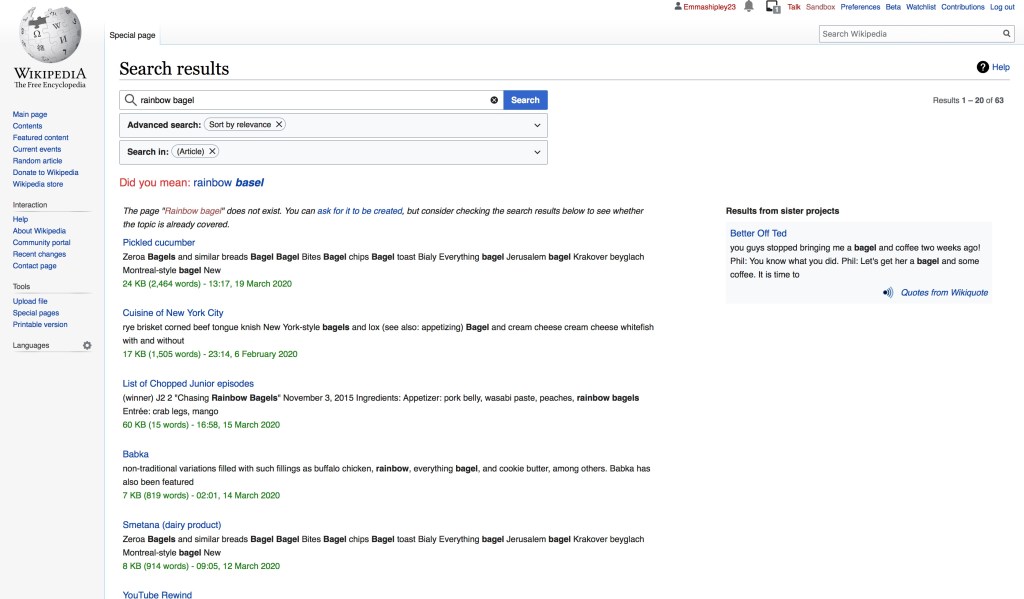
First, I researched a little bit about Wikipedia’s process. When creating a new article, Wikipedia wants to make sure that there is no other page about the topic the author wants to write. Do ensure this, the author must first do a Wikipedia search for the topic they wish to write about. If there is already a page, it will come up. However, if there is not, the term the writer typed into the box will pop up in red. To write an article about this subject, the writer must click the red words.
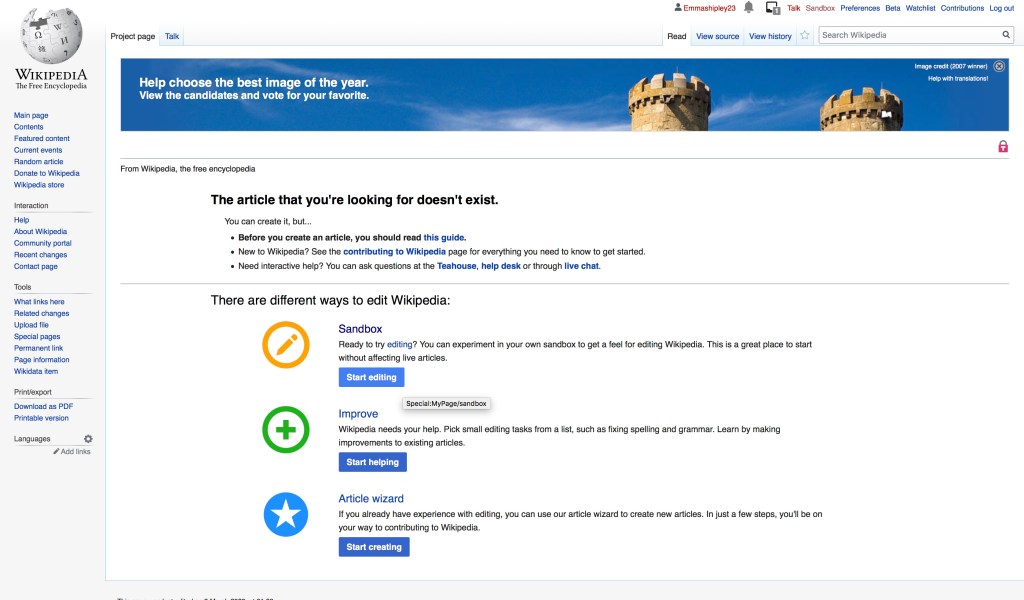
The writer is then prompted with the choices to practice writing the article in the Sandbox, improve writing by editing other posts, or begin writing their page in the Article Wizard.
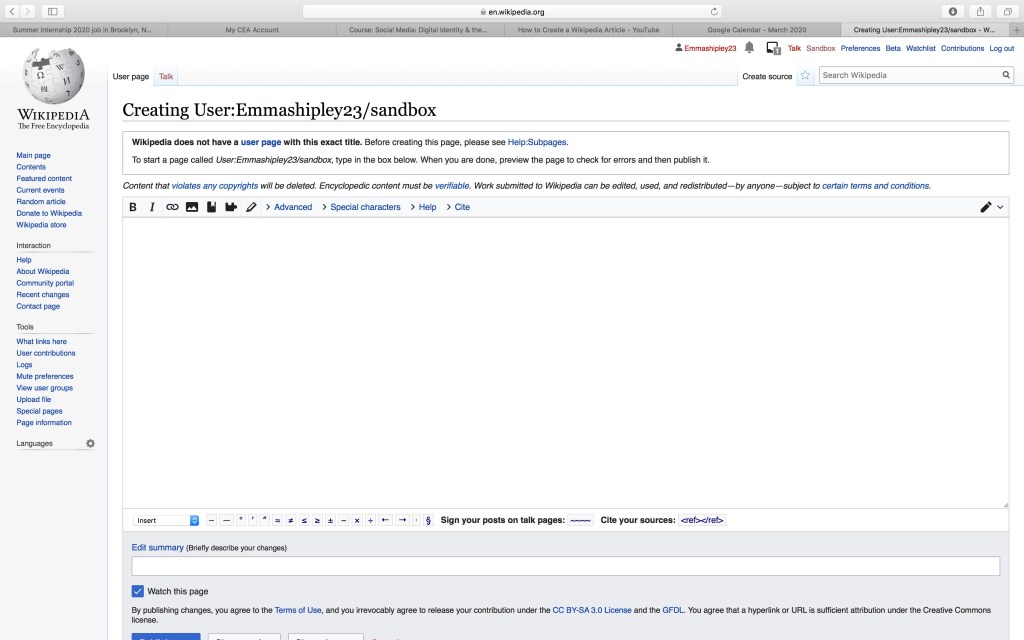
After familiarizing myself with the tools in the Sandbox, I moved onto Article Wizard. The Article Wizard looks like this:
I decided to write my Wikipedia article about rainbow bagels. Rainbow bagels became an internet sensation in 2016 due to social media. They are a delicious treat that popped up all over Instagram and even sparked a movement of other rainbow-colored foods. Rainbow bagels were created not too far from where I am from and they are a treat I still enjoy on weekends.
The first thing to do when writing a page is begin with a brief, overall description of the subject, so in my case, rainbow bagels. I included where bagels originated, who created them, and how they grew to fame on social media. During this paragraph I felt that it could be helpful to readers to link a few terms to other Wikipedia articles. To do this, the author should highlight the word or phrase they want to link, then click the link button on the top of the page. Wikipedia will open a pop-up box allowing the writer to fill in the page that they want to page to be linked.
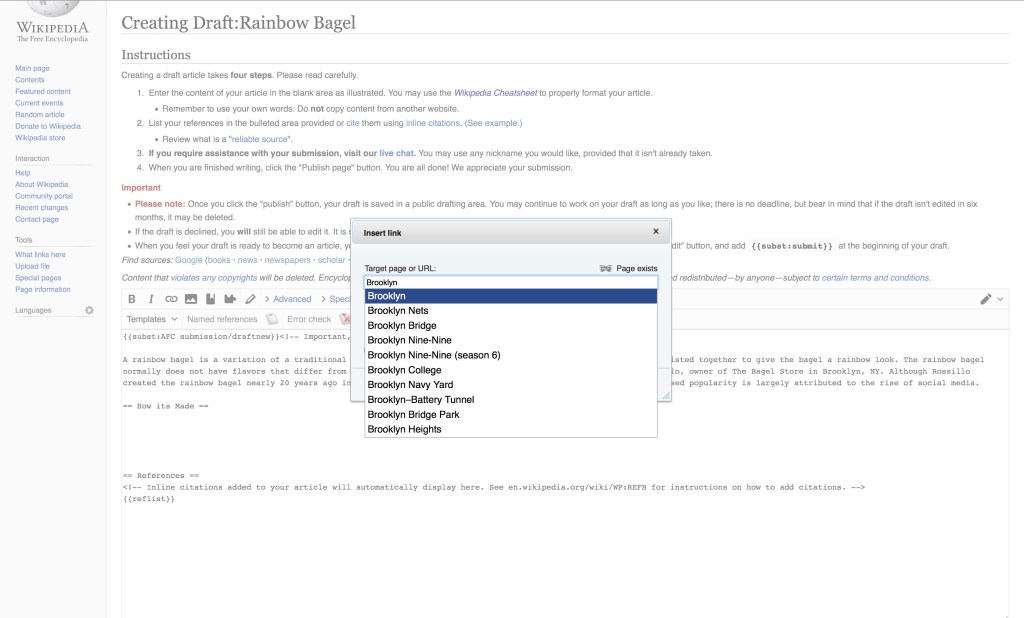
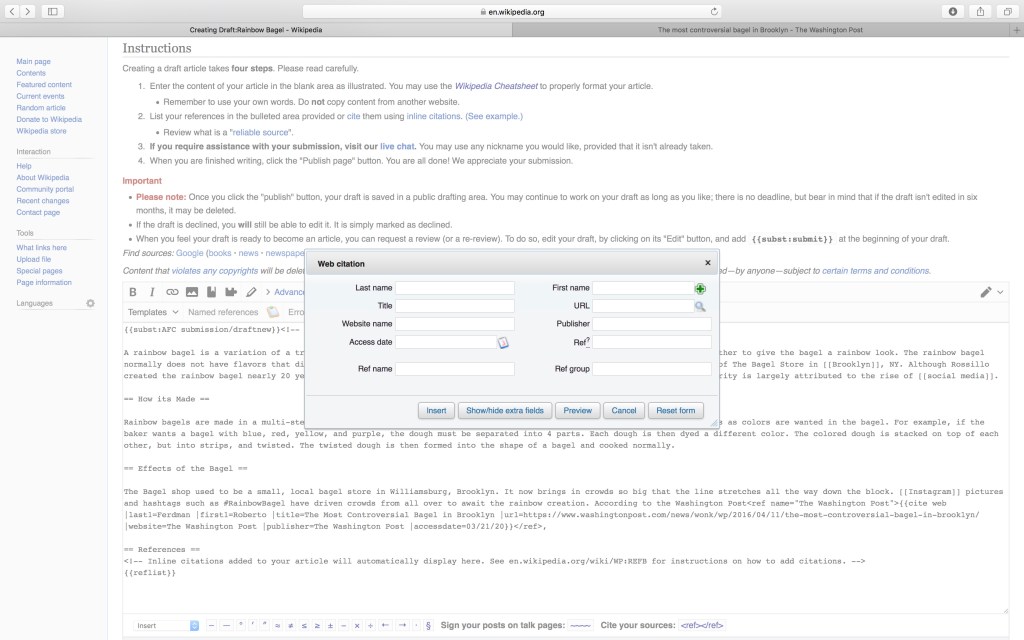
After I finished the first section of my article, I moved on to more descriptive subcategories. To create a new heading for a subcategory, the writer must type: == Heading Name ==. As I wrote about my more specific topics, I decided I wanted to do deeper research. This required me using outside sources and having to cite them. To site a source, highlight a word or phrase, then click the cite button at the top of the page. Wikipedia will open another pop-up box and request information about the source. Fill out the information and hit insert.
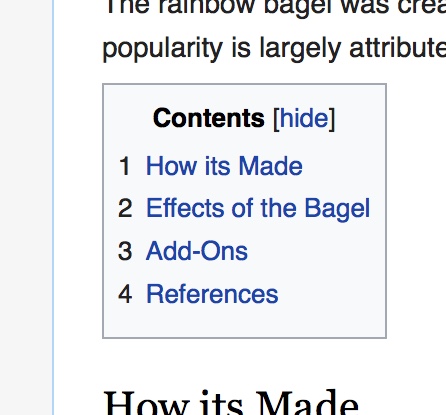
After creating 4 headings, references in included as one heading, Wikipedia automatically creates a table of contents with all the subheadings included in the post.
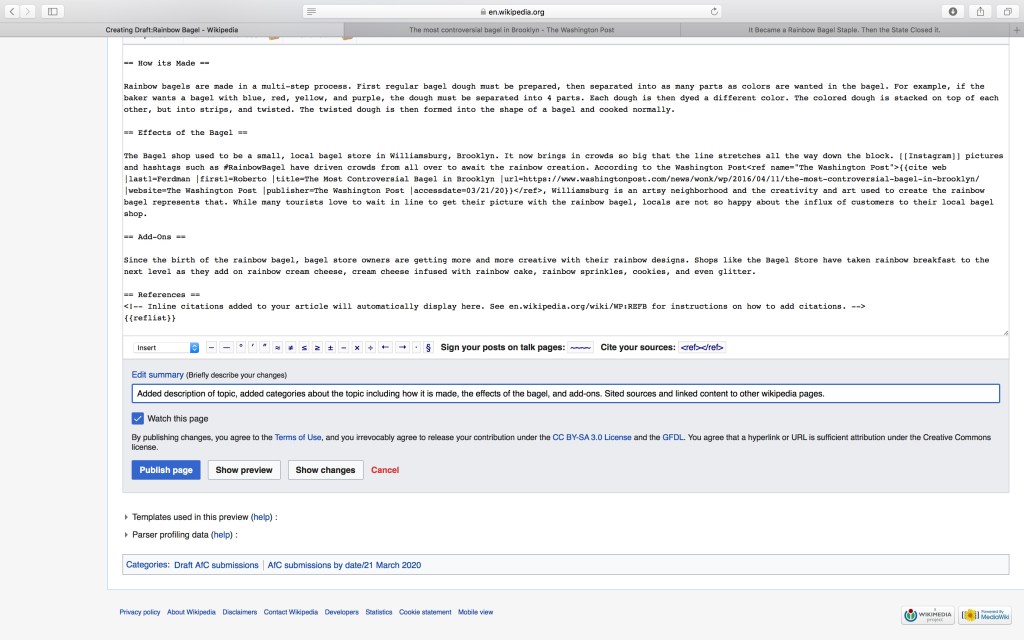
After proofreading the article and checking that all the sources are properly cited, it’s time to publish the page. At the bottom of the page there is a button to publish the article. After clicking submit, Wikipedia brings the writer to a few more pages to review the article format.
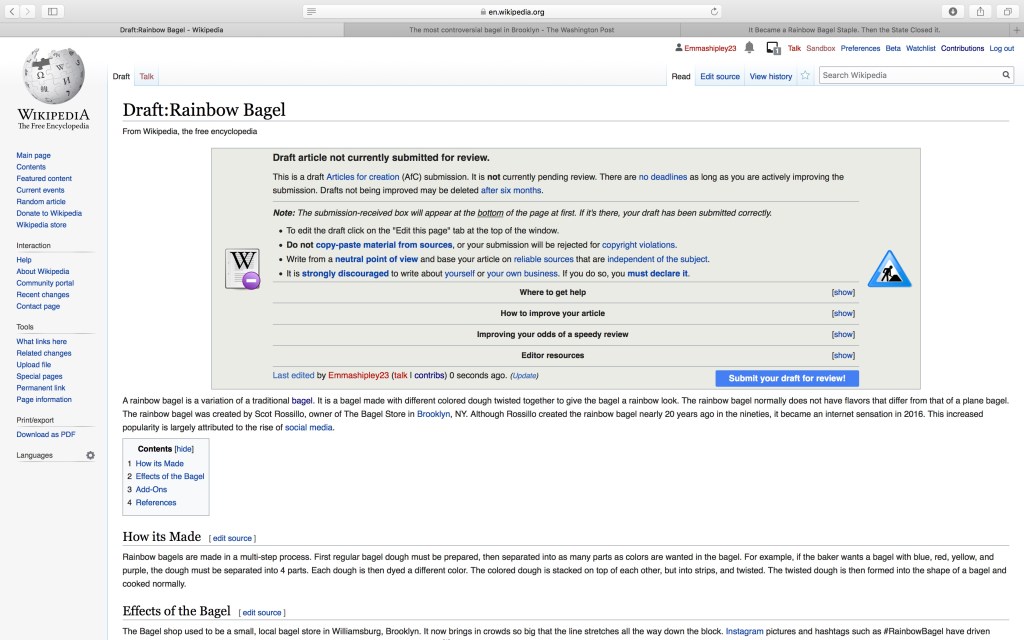
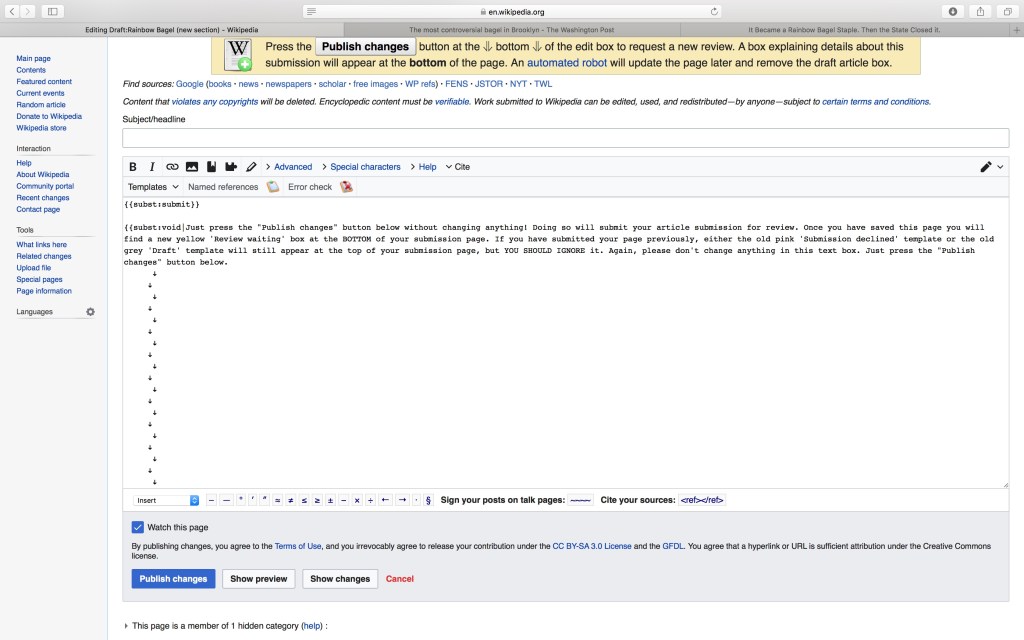
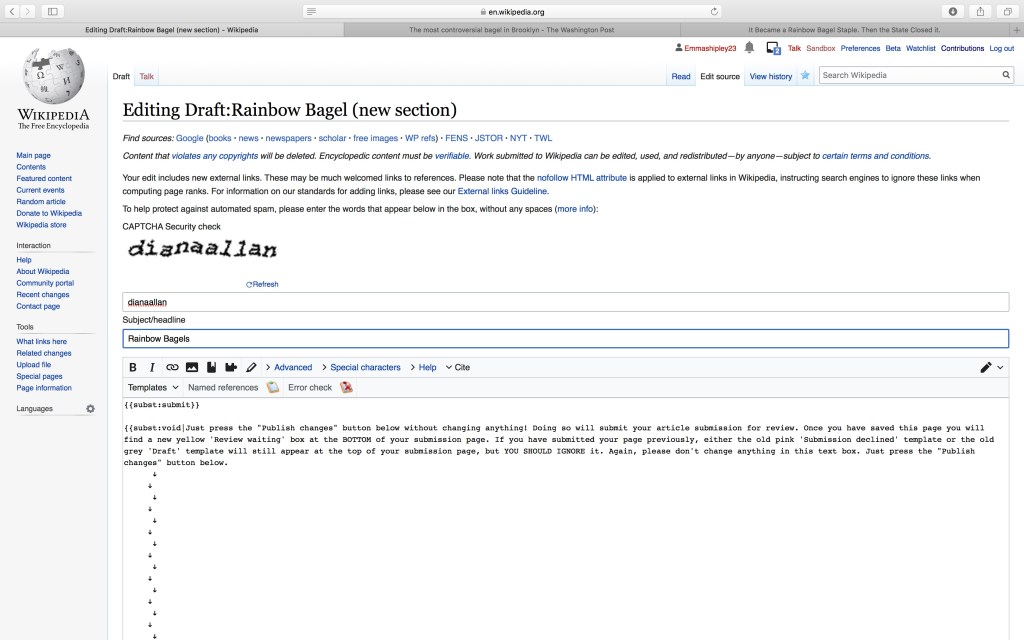
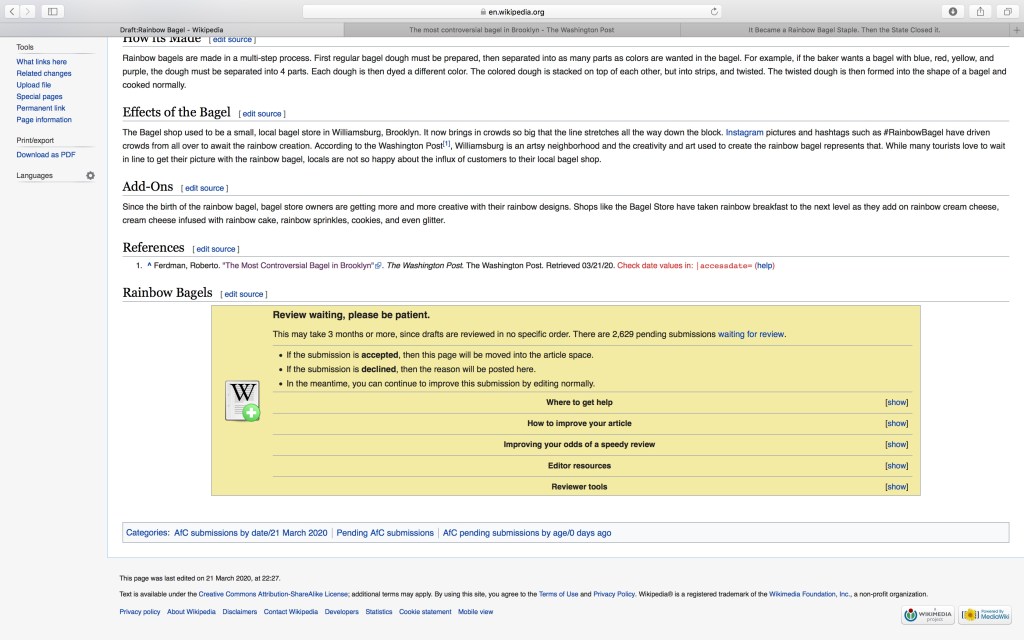
After going through the Wikipedia process, I learned about the many steps it takes to create an article. Even after an article is submitted, the page is not published. First, a team of volunteers at Wikipedia must fact check and review the page. Many submissions do not make it past this stage. Although there is a process involved in checking the articles, misinformation can still be submitted. After all, the teach checking the pages are human volunteers, and they make mistakes, too.
For me, it was a bit challenging to learn the software, at first. Wikipedia does not have super clear instructions on their website about how to write and edit an article. I learned the process through watching limited YouTube videos on the topic and a lot of trial and error. Overall, Wikipedia is a very useful tool to find out information, however, I wouldn’t use it as a scholarly source for legitimate research.
 Everything Emma